Digest — 2026-03-03
33 articles in 7 topics
.Net & C# Development (7)
Microsoft has released the first preview of .NET 11, introducing significant enhancements to the runtime, SDK, and libraries across C#, F#, and ASP.NET Core. Key features include Zstandard compression support, BFloat16 floating-point types, and new architecture enablement for RISC-V and s390x. The release also updates F# with parallel compilation by default and introduces several components in ASP.NET Core and .NET MAUI.
Microsoft released the February 2026 servicing updates for .NET and .NET Framework, focusing primarily on security patches across versions 8.0, 9.0, and 10.0. The update includes fixes for specific CVEs affecting ASP.NET Core, Entity Framework Core, and the runtime, with no new non-security features added this month. Developers are encouraged to apply these updates to ensure system stability and address known vulnerabilities.
The article explains the technical challenge of implementing interior pointers (pointers to the middle of an object) in a custom .NET garbage collector written in C#. Since interior pointers do not point to the object's header, the GC cannot easily determine where an object begins without scanning large memory regions. To solve this performance issue, the author introduces the 'brick table' technique, which maps memory addresses to objects to allow efficient identification of object boundaries.
A newly hired full-stack developer on macOS seeking enterprise-grade C# development tools is comparing Visual Studio Code against alternatives to match the functionality of Visual Studio 2026. The user previously worked primarily with Java and is looking for a robust IDE that supports advanced features beyond basic editing.
A Reddit user in the r/csharp community is requesting course recommendations for learning C# and .NET on Udemy, noting their background in C++. Their employer has provided free access to the platform as a benefit. The post seeks guidance from experienced developers on which specific courses would be most effective for transitioning to the .NET ecosystem.
The article introduces 'zerg', a new low-level TCP networking library for C# built on the Linux kernel's io_uring subsystem (version 6.1+). While it claims to offer up to 40% less CPU usage compared to the Unhinged framework, the author notes that performance benchmarks against epoll did not show significant improvements in throughput or latency. The project focuses on providing fine-grained control over sockets using standard .NET APIs like IBufferWriter and PipeReader.
A developer seeks best practices for unsubscribing from WPF events when a ViewModel closes without direct knowledge of its View. The user notes that finalizers are unsuitable for this task and emphasizes maintaining strict separation between the View and ViewModel in an MVVM architecture.
Aviation & Defense Tech (3)
A second B-21 Raider stealth bomber successfully completed its first flight test at Palmdale, California, marking a significant milestone for the U.S. Air Force's next-generation aircraft program. This event occurred just one month before the 10th anniversary of the contract award to Northrop Grumman, demonstrating continued progress in developing advanced military technology. The successful test validates ongoing engineering efforts and positions the B-21 as a critical asset for future air superiority operations.
Turkey has finalized an $11 billion contract to purchase twenty new Eurofighter Typhoon combat aircraft, marking its first major acquisition of a European fighter since 2017. This deal involves four nations that originally developed the Typhoon and represents a significant milestone in Turkey's efforts to modernize its air force with Western technology. The agreement solidifies Turkey's position as a key player in international defense markets by securing advanced capabilities from established manufacturers.
Northrop Grumman has secretly developed a new large-scale uncrewed aircraft system named Project Lotus at its Mojave facility. The project was confirmed by sources familiar with the work, though specific technical details remain classified until now. This revelation highlights ongoing advancements in autonomous flight technology within the commercial aerospace sector.
Flight Simulation & Sdks (4)
X-Plane developer SDK version 12.3.0 has been released with significant updates to the weather radar system, allowing aircraft developers to create realistic real-time precipitation simulations rather than static displays. The release also includes expanded airport scenery assets covering over 400 locations globally and new construction tools for runway and taxiway barricades. These features aim to enhance simulation fidelity by providing better spatial weather data and more detailed environmental graphics.
Laminar Research released version 12.2.1 of its flight simulator, featuring a massive update focused on scenery assets and community feedback. The release includes over 600 new airport additions from around the world, extensive hangar types, and various ground vehicles and lighting options. A notable technical highlight is the introduction of an undocumented feature in Zermatt's heliport that helps mitigate draw order issues for transparent materials.
FlightSimExpo 2026 organizers have finalized early registration pricing, which concluded on March 1, with standard rates now active for the June 12–14 event in Saint Paul, Minnesota. The convention will feature over 40 exhibitors, including new additions like Grinnelli Designs' Combat Arena and established sponsor Navigraph, alongside travel discounts from major airlines. Since 2018, the event has attracted nearly 10,000 attendees across multiple locations, with this year marking its first host in Saint Paul.
Axonos has confirmed that its X-Plane scenery project for Tokyo Haneda Airport (RJTT) is officially entering beta testing after nearly two years of development. The project, led by developer Lee Miles, focuses on replicating the airport's complex high-density traffic patterns and closely spaced parallel runways with operational accuracy. While core infrastructure is complete, final adjustments to environmental details and markings are ongoing before a specific release date is announced.
Global Conflict & War (4)

Global energy prices surged and stock markets fell as fears intensified regarding a prolonged conflict in the Middle East involving Iran, Israel, and the US. The escalation has disrupted critical shipping routes like the Strait of Hormuz and caused major exporters such as QatarEnergy to halt production, driving up costs for fuel and fertilizers worldwide. This situation poses significant risks to inflation and economic forecasts, prompting central banks and governments to consider potential interest rate adjustments.

Hezbollah has launched rockets into Israel for a second day, escalating regional tensions involving the US, Iran, and Lebanon after its top leader was assassinated in Tehran. In response, Israel has expanded its military presence with ground troops entering southern Lebanon while conducting air strikes that have killed dozens of civilians. This escalation marks a critical shift as Hezbollah defies Lebanese government demands to disarm, risking further destruction despite warnings from President Joseph Aoun about internal divisions.

The US confirmed that six soldiers died after an Iranian drone strike hit a fortified bunker in Kuwait, raising the death toll from three to six following delayed confirmation of additional casualties. Defence Secretary Pete Hegseth stated the attack evaded air defenses and targeted a tactical operations center, while officials questioned whether the makeshift office space was adequately shielded against such threats. This incident marks the first confirmed US military fatalities since the escalation of conflict between Iran and Israel, occurring alongside reports of three US fighter jets being downed in friendly fire.

The US State Department is deploying military aircraft and charter flights to evacuate approximately 9,000 Americans from the Middle East as tensions escalate following an Israeli strike on Iran. While officials urge citizens in over a dozen countries to depart immediately due to safety risks, many travelers report logistical chaos, cancelled commercial flights, and insufficient support for those already stranded. This crisis has prompted similar evacuation preparations by France and heightened registration efforts by the UK amidst an estimated 500,000 to one million US nationals in the region.
Machine Learning & Ai Research (10)

Researchers published findings indicating that Large Language Models (LLMs) can identify pseudonymous social media users with high accuracy, achieving up to 68% recall and 90% precision. This capability significantly undermines the privacy protection offered by burner accounts and other anonymity measures, as it enables cheap and rapid deanonymization compared to traditional methods. The study highlights that LLMs invalidate the assumption that targeted identification requires extensive manual effort or structured data sets.

The developers of GoodSeed, a new open-source machine learning experiment tracker, have released version 0.3.0 as a direct alternative to Neptune. The tool offers features such as GPU/CPU monitoring, Git status logging, and the ability to view experiments through a Neptune proxy. It is currently available for local use via pip installation with a beta remote server option.
The author, founder of Catalyst Neuromorphic, details the development and verification of three neuromorphic architecture prototypes (N1, N2, and N3) that match or exceed Intel's Loihi specifications. These architectures utilize custom Verilog designs running on FPGA and AWS F2 hardware to demonstrate competitive benchmark results in tasks like SHD and N-MNIST. The project aims to eventually tape out physical chips while offering cloud-based access for researchers.
This tutorial demonstrates how to build a scalable end-to-end machine learning pipeline using the Vaex library to process millions of rows without loading data into memory. The guide covers generating a large synthetic dataset, engineering features through lazy expressions, and training a logistic regression model via Vaex's scikit-learn integration. It concludes by evaluating model performance using decile lift metrics and exporting results to Parquet format.
The article details a Python tutorial for building an Explainable AI pipeline using the SHAP-IQ library to analyze feature importance and interaction effects. It demonstrates training a Random Forest model on the California housing dataset and applying SHAP-IQ to generate precise, theoretically grounded explanations for individual predictions. The process involves extracting main effects, pairwise interactions, and decision breakdowns, which are then visualized using Plotly charts and ASCII outputs.
The article details the construction of a production-grade multi-agent communication system using LangGraph and Pydantic. It implements three specialized agents (Planner, Executor, Validator) that coordinate via a structured message bus and persistent SQLite state rather than direct function calls. This architecture ensures modularity, traceability, and durable memory for complex agent orchestration tasks.
Microsoft is releasing Microsoft.Extensions.VectorData to provide a unified abstraction layer for working with various vector databases like Qdrant, Redis, and SQL Server. This library simplifies the implementation of Retrieval-Augmented Generation (RAG) systems by allowing developers to store text embeddings and perform semantic searches across different providers using consistent C# interfaces. The article demonstrates how this tool enables applications to retrieve relevant documents based on meaning rather than exact keyword matches.
An author describes how he used AI and prompt engineering to generate WinForms code that allowed his 82-year-old mother to continue her industrial time-study work after her hardware dongle failed. The story highlights the intersection of legacy Windows development (WinForms), modern AI capabilities, and real-world business continuity challenges in Germany.
Microsoft has made GitHub Copilot testing for .NET generally available in Visual Studio 2026 v18.3, enabling AI-powered unit test generation directly within the IDE. This feature allows developers to generate, build, and fix tests using natural language prompts or specific code scopes without leaving their development environment. The tool integrates deeply with existing workflows by automatically detecting failures and iterating until a stable test suite is achieved.
The X-Plane development team released version 12.4.0, introducing significant performance upgrades including multi-threading for scenery and new SDK APIs for flight initialization. The update also features expanded asset libraries with new aircraft models, vehicles, and detailed terrain objects alongside a refreshed list of gateway airports from various regions. Developers are encouraged to utilize these tools while adhering to strict guidelines regarding grass placement to prevent performance degradation.
Politics & Media Regulation (3)

A jury has found Colin Gray, the father of a 14-year-old boy accused of killing four people at a Georgia high school, guilty of murder and child cruelty. Prosecutors argued that Gray knew his son was planning to commit violence yet purchased him an AR-style rifle, ignoring prior warnings about online threats. While Gray's son awaits trial, Gray now faces a minimum sentence of 30 years in prison for his role in the attack.

Google plans to introduce mandatory developer verification for Android apps starting next year, requiring external developers to register with real names and pay fees to prevent sideloading. This move aims to enhance security by curbing unverified applications but risks undermining Android's legacy of openness and could drive developers away from the platform. While experts note this may improve safety against malware, it does not stop scams and threatens the ecosystem that distinguishes Android from Apple.

FCC Chairman Brendan Carr has threatened to enforce equal-time regulations on daytime and late-night TV talk shows but has not applied similar pressure to talk radio. Critics argue this enforcement is inconsistent because talk radio is predominantly conservative, aligning with President Trump's preferences, while TV networks face scrutiny for hosting liberal hosts like Stephen Colbert or platforms like The View. Carr defended his approach by claiming broadcasters are misreading FCC precedents regarding equal-time rules, though he acknowledged the rule will apply to all broadcast media eventually.
Space Exploration (2)

Former NASA Administrator Jim Bridenstine supports new legislation designed to limit NASA's funding for any single launch provider to under 50%, aiming to foster competition and protect smaller manufacturers. The proposed law targets SpaceX, which currently dominates NASA's crewed and cargo missions, potentially restricting its ability to execute future lunar flights. However, the article notes a conflict of interest as Bridenstine's lobbying firm recently generated significant revenue from United Launch Alliance, his former competitor.
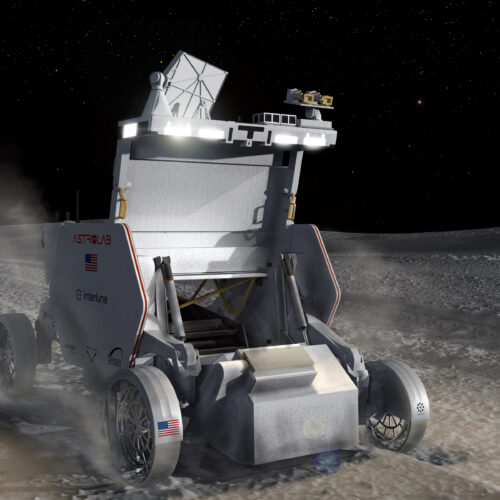
Space agencies SpaceX and NASA are shifting focus toward lunar surface operations, creating a favorable environment for commercial ventures like Astrolab and Interlune. These two companies have announced a partnership to develop electric harvesters designed to extract Helium-3 from lunar regolith. This collaboration aims to support long-term mining activities as global interest in the Moon intensifies.